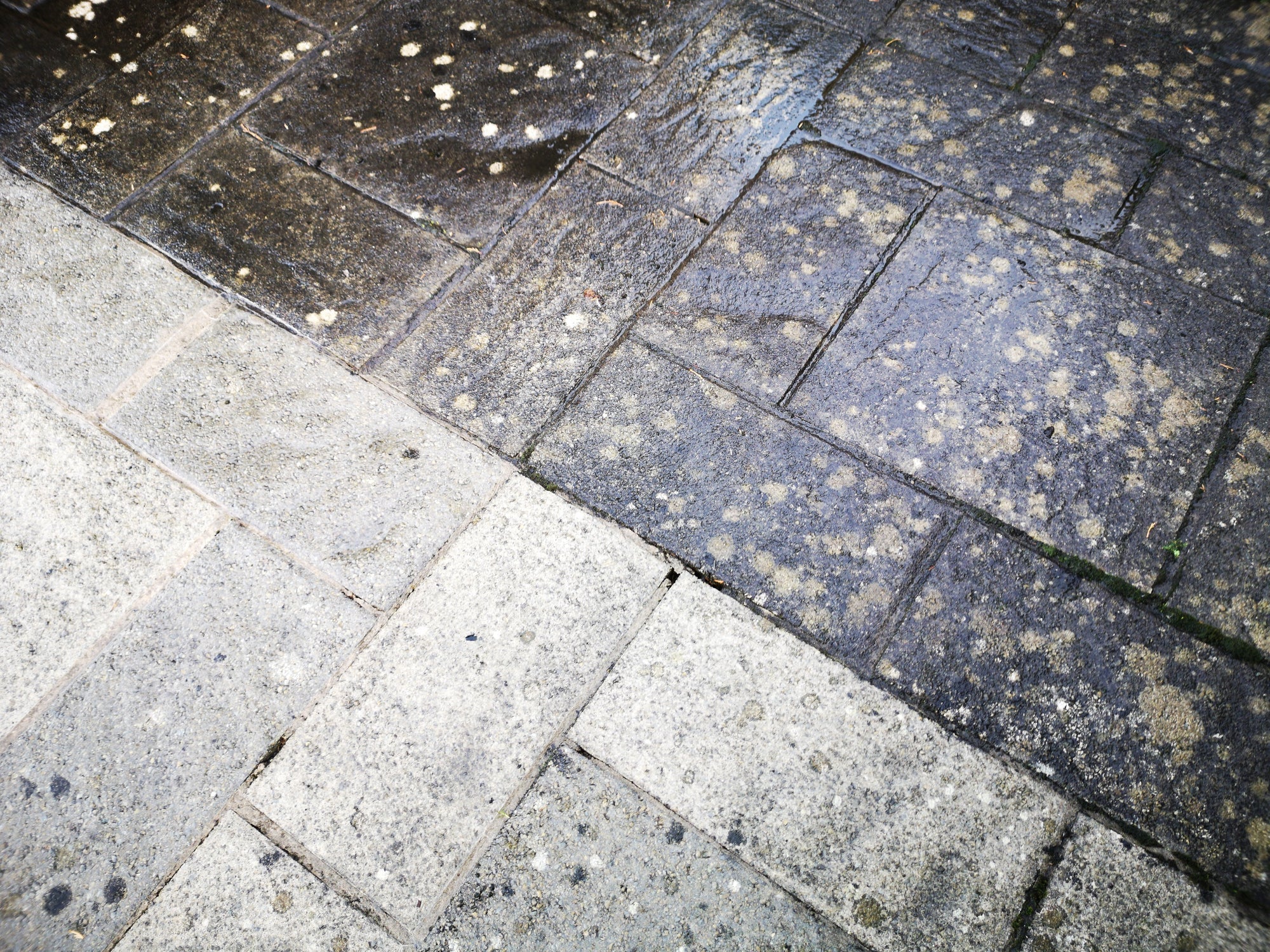

Efflorescence often appears without warning. One week your patio or brickwork looks clean and consistent in colour, and the next, a white powdery haze begins to form across the surface. It is especially noticeable after rain and tends to stand out more clearly on darker paving or freshly laid materials.
For many homeowners, the immediate assumption is that something has gone wrong, that the patio has been installed incorrectly or that the white residue is permanent staining. In most cases, neither is true. Efflorescence is a common and natural process, particularly in the UK’s damp climate.
Before looking at how to remove efflorescence, it’s important to understand what it is and why it appears in the first place.
What Is Efflorescence?
Efflorescence is the visible result of soluble salts moving through porous materials and settling on the surface. These salts are naturally present in cement, mortar, concrete, and even some types of natural stone.
When moisture enters the material, typically from rain, ground moisture, or general humidity, it dissolves small amounts of these salts. As the water travels through the paving or brickwork and eventually evaporates, it leaves the salts behind. The white, chalky residue that remains is what we recognise as efflorescence.
It usually looks like a fine powder or light haze across the surface. In some cases, it can form thicker patches or streaks, particularly where water movement is more concentrated.
Where Efflorescence Commonly Appears
Efflorescence can occur on a range of outdoor surfaces, but it is most commonly seen on:
· Newly laid patios
· Concrete slabs
· Brick walls
· Mortar joints
· Freshly pointed paving
New installations are particularly prone because the materials still contain higher levels of soluble salts. During the curing process, moisture movement is more active, increasing the likelihood of salts being drawn to the surface.
Concrete paving is especially susceptible due to its cement content. Natural stone such as sandstone or limestone can also display efflorescence if moisture moves through the bedding materials beneath.
In most cases, efflorescence is most noticeable within the first year after installation and gradually reduces over time as the salts are exhausted.
Why Efflorescence Is So Common in the UK
The UK climate creates ideal conditions for efflorescence to develop. Frequent rainfall, relatively mild temperatures, and extended periods of damp weather mean that paving and brickwork often remain moist for longer than they would in drier climates.
Moisture is the key driver. The more water that passes through porous materials, the greater the opportunity for salt migration to occur. Autumn and winter are typically when efflorescence becomes most visible, as slower evaporation allows salts to accumulate more noticeably on the surface.
It’s worth noting that efflorescence does not usually appear because of poor workmanship. In the majority of cases, it is simply a natural reaction between water and the materials used.
Why Efflorescence Is Not a Structural Problem
Although efflorescence can be unsightly, it is usually a cosmetic issue rather than a structural one. It does not mean the patio is unstable, nor does it suggest that the paving is defective.
The presence of white salts on the surface indicates moisture movement, but this is not inherently damaging in most domestic installations. Over time, as the available salts diminish, the problem often reduces naturally.
However, persistent or heavy efflorescence can sometimes signal excessive moisture retention. Poor drainage, compacted sub-bases, or continuous water exposure may prolong the issue. In those cases, managing moisture becomes an important part of long-term control.
What Efflorescence Is Not
Efflorescence is frequently confused with other types of white staining.
It is not white lichen, which appears as small, circular patches and is organic growth rather than mineral residue. It is not mould or mildew. It is also not surface dirt that can simply be washed away with standard cleaning products.
One of the risks of misidentification is using inappropriate treatments. Strong acid-based cleaners, for example, are sometimes applied in an attempt to remove white residue quickly. On natural stone, this can damage the surface, increase porosity, and potentially worsen future staining.
Correctly identifying efflorescence as a mineral salt deposit ensures that removal is approached carefully rather than aggressively.
The Role of Moisture Movement
At the heart of efflorescence is one simple factor: moisture movement through porous material.
The more freely water can travel through paving, the more likely salts are to reach the surface. This is why drainage, curing time, and environmental exposure all influence how visible efflorescence becomes.
New patios, in particular, often experience this process as part of normal curing. Sealing too early can trap moisture inside the material, potentially prolonging the issue rather than resolving it.
Once you understand that efflorescence is simply salt left behind as moisture evaporates, removing it becomes a controlled process rather than a guess.
Removing efflorescence safely begins with recognising that it is a surface salt deposit, not embedded staining. Because it forms as moisture evaporates, the goal is to remove the residue without forcing more water into the material or damaging the surface beneath.
Start with the Simplest Approach
In many cases, the first step is to allow time for natural weathering. Efflorescence often reduces gradually as salts continue to migrate out of the material and are washed away by rainfall. This is especially true for newly installed patios or brickwork still going through the curing process.
If the surface is fully dry, a stiff but non-abrasive brush can be used to remove loose salt deposits. It’s important that the area is completely dry before brushing. Brushing while damp can dissolve salts and draw them back into the pores of the stone, prolonging the issue.
This dry-brushing method is often enough for light efflorescence and avoids unnecessary use of chemicals.
When to Use a Specialist Efflorescence Cleaner
If the white residue is heavier, patchy, or persistent, a specialist efflorescence remover may be required. These products are designed specifically to dissolve mineral salts without damaging paving materials.
Before applying any treatment:
· Ensure the surface is suitable for the product
· Test on a small, inconspicuous area first
· Follow the manufacturer’s dilution instructions carefully
Most efflorescence removers require the surface to be lightly pre-wetted before application. After treatment, thorough rinsing is essential to remove dissolved salts and prevent them from drying back onto the surface.
It is important to avoid generic brick acids or strong hydrochloric acid solutions unless the paving manufacturer confirms they are safe. Harsh acids can etch natural stone, alter colour, and increase porosity, which may lead to further salt migration later.
Using a purpose-made cleaner ensures the salts are removed in a controlled way rather than aggressively stripped.
What to Avoid
Overly aggressive cleaning methods can do more harm than good.
High-pressure washing can force water deep into the material, encouraging further moisture movement and future efflorescence. It may also erode jointing materials or damage softer stone surfaces.
Sealing a patio while efflorescence is still active is another common mistake. Trapping moisture inside the slabs can prolong salt migration and cause recurring white patches beneath the sealer.
The safest approach is measured and patient rather than forceful.
Why Efflorescence Sometimes Returns
It is not uncommon for efflorescence to reappear after initial cleaning. This usually indicates that salts are still present within the material and that moisture is continuing to move through it.
On new patios, this process can last several months as the materials fully cure. In other cases, ongoing dampness caused by poor drainage, compacted sub-bases, or regular water exposure may be contributing to repeated salt migration.
If efflorescence returns, it does not necessarily mean the cleaning was ineffective. It may simply mean that the material has not yet finished releasing residual salts.
Preventing Future Efflorescence
Long-term prevention focuses on managing moisture rather than repeatedly treating the surface.
Ensure patios and paved areas have adequate drainage so water does not pool or sit for extended periods. Clear gutters and downpipes regularly to prevent overflow onto paving.
For newly laid patios, allow sufficient curing time before applying sealers. Once efflorescence has naturally reduced, a breathable sealer may help limit moisture penetration while still allowing vapour to escape.
Avoid overwatering nearby garden beds or allowing irrigation systems to splash directly onto paving.
Regular light maintenance, sweeping debris, checking joints, and monitoring damp areas, helps reduce prolonged moisture retention.
When to Seek Professional Advice
If efflorescence is extensive, persistent, or accompanied by signs of damp elsewhere, professional assessment may be advisable. Specialists can determine whether the issue is simply cosmetic salt migration or linked to a broader drainage or moisture concern.
They can also apply suitable treatments safely on delicate natural stone or heritage brickwork where inappropriate cleaning could cause irreversible damage.
A Balanced, Informed Approach
Efflorescence is one of the most common concerns for homeowners with patios or brickwork, but it is rarely a sign of serious structural failure. In most cases, it is a temporary cosmetic issue linked to natural moisture movement.
By allowing time where appropriate, using specialist cleaners carefully, and improving moisture control around the property, efflorescence can be managed without damaging the surface.
A patient, informed approach protects both the appearance and integrity of paving materials, ensuring that white salt deposits remain a manageable maintenance issue rather than a recurring frustration.