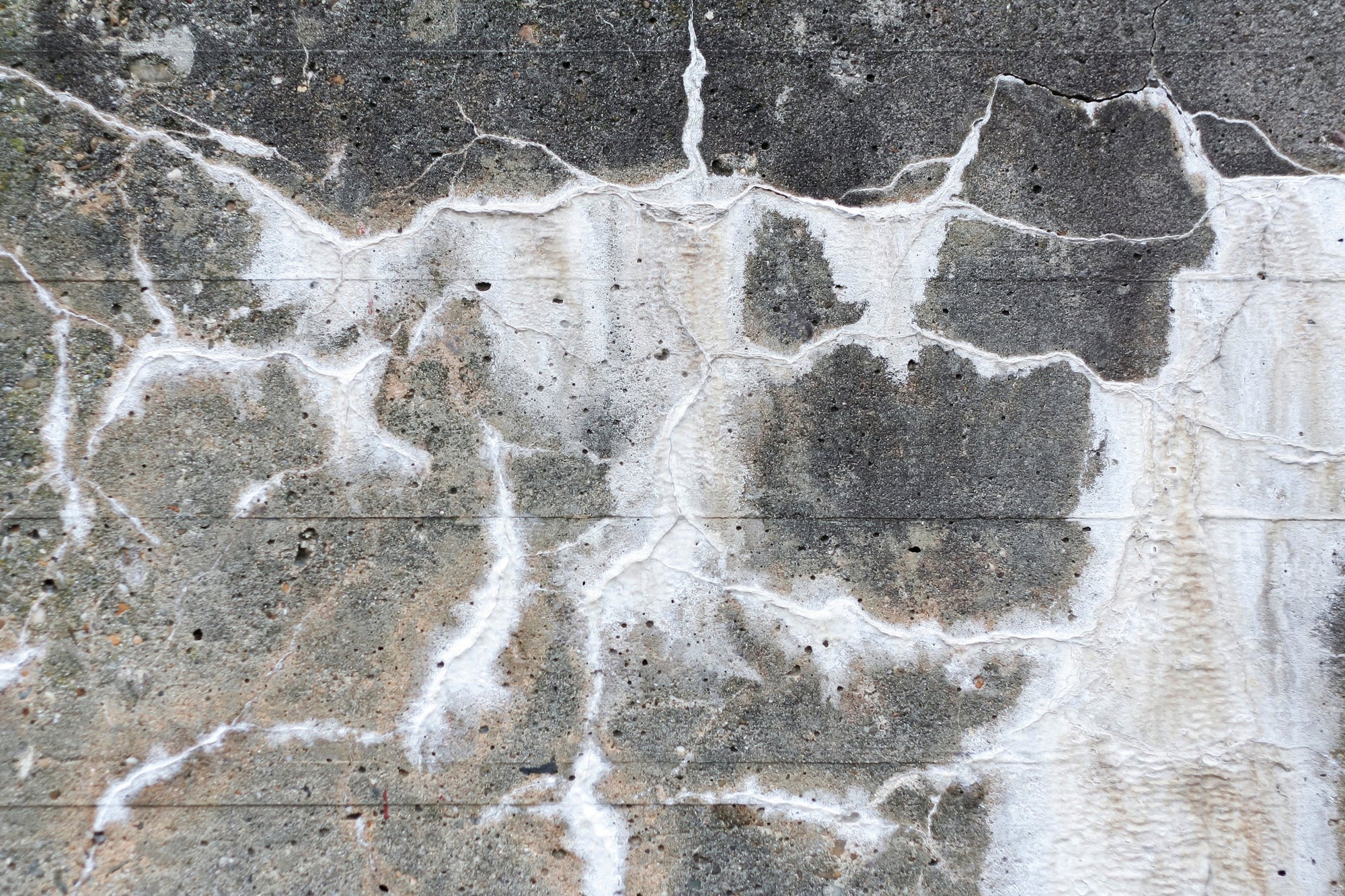

White spots on a patio often appear without warning. One week the paving looks consistent in colour, and the next, pale patches or chalky marks begin to stand out across the surface. They are particularly noticeable after wet weather and tend to show up more clearly on darker stone, where the contrast makes them difficult to ignore.
The immediate reaction is usually to clean them off as quickly as possible. However, white spots are not always surface dirt. In most cases, they are the result of something happening within or on the stone itself. Before attempting to remove them, it’s important to understand exactly what you are dealing with. The correct solution depends entirely on the cause.
The Three Main Causes of White Spots on a Patio
White spots on patio slabs typically fall into one of three categories: efflorescence, white lichen, or mineral deposits from hard water. Although they can look similar at first glance, they behave differently and require different treatment approaches.
Efflorescence
Efflorescence is the most common cause of white staining on patios, especially on newer installations. It occurs when moisture moves through porous paving materials and carries soluble salts to the surface.
As the water evaporates, it leaves behind a white, powdery residue. This is what creates the pale or dusty appearance across the slabs. Efflorescence often appears more prominently after rainfall, when moisture is drawn up through the stone and then dries out at the surface.
It is particularly common on natural stone such as Indian sandstone or limestone, as well as on concrete paving. Cement-based bedding materials beneath the slabs can also contribute to the presence of soluble salts.
While it may look concerning, efflorescence is not a structural fault. It is a natural chemical reaction between water and minerals within the materials. In many cases, it reduces gradually over time as the salts are depleted.
White Lichen
White lichen is different. Unlike efflorescence, it is not a mineral deposit but a living organism. It often appears as small, circular white or pale grey spots that feel slightly raised or textured.
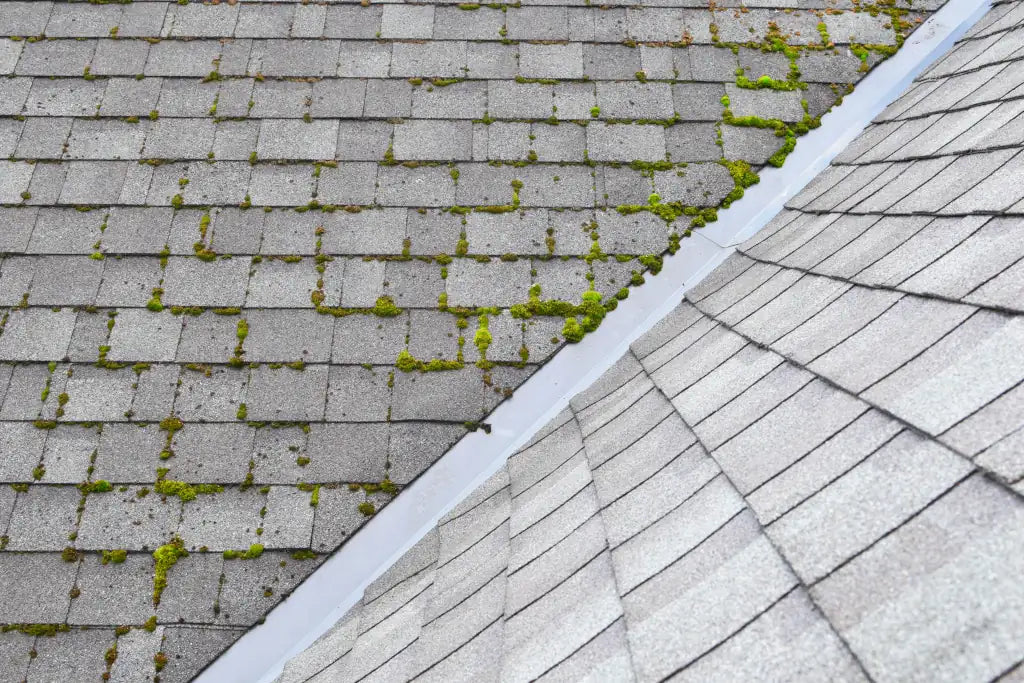
Lichen tends to grow in damp, shaded areas and can embed itself into the surface of natural stone. Over time, it becomes more firmly attached and may appear as distinct clusters rather than a broad haze.
One of the key differences between lichen and efflorescence is that lichen cannot simply be brushed away when dry. It is bonded to the surface and requires treatment to break it down properly.
Hard Water and Mineral Deposits
A third cause of white spotting is mineral residue left behind by hard water. If patio slabs are exposed to repeated dripping from taps, irrigation systems, or overflowing gutters, minerals such as calcium can accumulate as the water evaporates.
These deposits are usually more localised. They often appear beneath a consistent drip point or along the edge of a patio where water regularly splashes. The staining tends to be chalky and may build up gradually over time.
Unlike efflorescence, which can appear across a wide area, hard water staining usually follows a clear water source.
Why Some Patios Show White Spots More Clearly
Not all patios display white spotting in the same way. Material plays a significant role.
Natural stone and concrete are porous, meaning they allow moisture to travel through them. This movement of water is what enables efflorescence to occur. The more porous the material, the more noticeable the salt migration may be.
Darker paving also highlights white residue more dramatically. A light haze that might go unnoticed on pale stone can appear striking on darker slabs.
New patios are often more prone to efflorescence because the materials still contain higher levels of soluble salts. Over time, as these salts are gradually drawn out, the problem typically reduces.
Porcelain paving behaves differently. Because it is far less porous, true efflorescence is less common. However, surface mineral deposits from hard water can still occur.
What White Spots Are Not
It is important to clarify what white spots usually do not indicate.
They are not typically a sign of structural failure. They do not necessarily mean the patio has been laid incorrectly. In most cases, they are cosmetic rather than structural issues.
However, misidentifying the cause can lead to inappropriate cleaning methods. Using strong acids on natural stone, for example, can damage the surface and increase porosity, making future staining more likely rather than less.
The key to resolving white spots safely lies in identifying which of these three causes is affecting your patio. Once you can clearly distinguish between mineral salts, organic growth, or hard water deposits, the next step becomes much more straightforward, because each requires a slightly different removal approach.
Once you’ve identified the cause of the white spots, choosing the correct removal method becomes far more straightforward. The key is matching the treatment to the problem, mineral salts require a different approach from organic growth, and both differ from surface-level water deposits.
Removing Efflorescence Safely
If the white spots are powdery, spread across a wider area, and most noticeable after rainfall, efflorescence is the likely cause.
In many cases, the simplest solution is patience. Efflorescence often reduces naturally over time as soluble salts are gradually drawn out of the stone and washed away. This is particularly true for patios laid within the last year.
If the residue is light, begin by allowing the surface to dry completely. Once dry, a stiff but non-abrasive brush can be used to remove loose powder from the surface. It’s important not to brush while the patio is damp, as this can push salts back into the stone.
Where efflorescence is heavier or persistent, a specialist efflorescence remover designed for external paving may be used. These products are formulated to dissolve salt deposits without damaging the stone. Always:
· Test on a small, inconspicuous area first
· Follow dilution instructions carefully
· Avoid applying in direct sunlight
· Rinse thoroughly after treatment
Generic brick acids or strong hydrochloric acid solutions should be avoided unless explicitly approved by the paving manufacturer. Harsh acids can etch natural stone and permanently alter its appearance.
Removing White Lichen
If the white spots are small, circular, and firmly attached to the surface, lichen is the likely cause.
Because lichen is organic, brushing alone will not remove it effectively. Scraping can damage the surface without killing the organism beneath.
Instead, apply a suitable biocide or organic growth remover designed for patios. These treatments work gradually by breaking down the lichen at a biological level. Results are not instant, the lichen will typically fade, dry out, and deteriorate over several days or weeks depending on conditions.
Light brushing after treatment can help remove the weakened residue, but aggressive scrubbing should be avoided.
Shaded and damp areas are more prone to lichen regrowth. Improving airflow and reducing moisture exposure will help prevent recurrence.
Removing Hard Water and Mineral Deposits
If the white staining is localised and appears beneath dripping taps, irrigation systems, or overflowing gutters, hard water deposits are likely responsible.
The first step is addressing the water source. Repair leaking taps, adjust irrigation systems to prevent splashback, and ensure gutters and downpipes are functioning correctly. Without resolving the cause, mineral staining will continue to return.
To remove the deposits themselves, use a mild descaling product suitable for natural stone or concrete. Again, always test a small area first. Avoid strong acidic cleaners that may damage the paving surface.
After treatment, rinse thoroughly to prevent residue from drying back onto the slabs.
Why White Spots Sometimes Reappear
If white spots return after cleaning, this usually indicates ongoing moisture movement.
Efflorescence may continue appearing on newer patios until the curing process is complete and soluble salts are exhausted. Poor drainage can prolong this process by allowing water to remain beneath the slabs.
Lichen will return if damp, shaded conditions persist. Hard water staining will reappear if mineral-rich water continues to splash onto the same areas.
Rather than repeatedly treating the surface, it is often more effective to address the environmental conditions encouraging the problem.
Preventing White Spots in the Future
Long-term prevention focuses on moisture management and sensible maintenance.
· Ensure patios are laid with proper drainage so water does not pool
· Avoid sealing newly laid patios until they have fully cured
· Keep gutters clear to prevent overflow onto paving
· Reduce irrigation splashback
· Sweep regularly to prevent debris buildup
For natural stone patios, sealing may be considered once efflorescence has naturally reduced. Sealing too early can trap moisture and worsen the issue.
Light, routine maintenance is far more effective than aggressive, reactive cleaning.
When to Consider Professional Help
If white staining is extensive, deeply embedded, or affecting delicate natural stone, professional assessment may be worthwhile.
Specialists can determine whether the issue is persistent efflorescence, embedded lichen, or mineral contamination and apply the correct treatment safely. This reduces the risk of surface damage and often produces more consistent results.
A Balanced Approach Protects the Surface
White spots on a patio are rarely permanent and are usually manageable once correctly identified. The most important step is avoiding harsh shortcuts that may damage the paving.
By matching the removal method to the cause and improving moisture control around the patio, white spots can be reduced significantly, and often prevented from returning.
With a measured approach, patios retain their colour, integrity, and appearance, even in challenging weather conditions.