How to Clean Porcelain Tiles
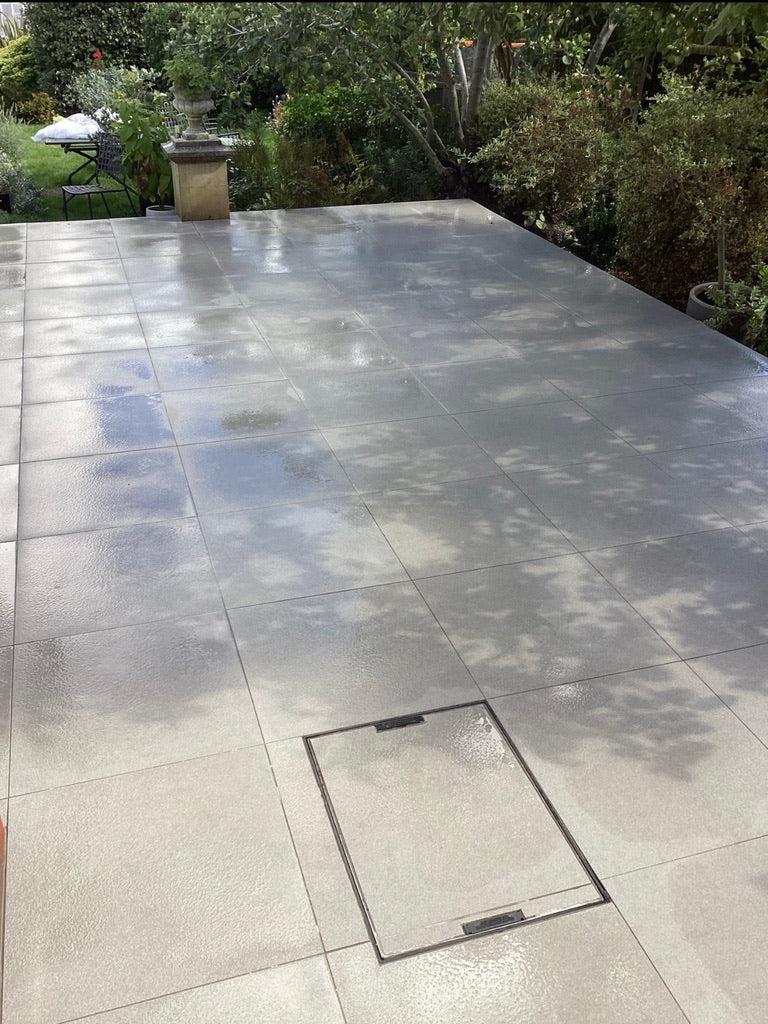
When it comes to choosing materials for outdoor spaces, porcelain patios have quickly become a favourite among homeowners across the UK. Their clean lines, modern appearance, and reputation for being low maintenance make them an appealing alternative to traditional materials like sandstone or concrete paving slabs.
Porcelain paving offers a balance of style and practicality that suits busy households. However, while porcelain is far easier to look after than many natural stones, it is not completely maintenance-free. Understanding how to clean porcelain paving slabs properly helps preserve their appearance and ensures they continue to perform well year after year.
Why Porcelain Patios Have Become So Popular
Porcelain patio tiles are manufactured from refined clay and fired at extremely high temperatures. This process creates a dense, hard-wearing surface that is far less porous than natural stone, meaning it does not absorb water in the same way.
Because porcelain is non-porous, it is naturally more resistant to staining from oil, food, and organic matter. It is also less prone to frost damage, which makes it particularly suitable for the British climate. These qualities explain why so many homeowners now choose porcelain when planning modern outdoor spaces.
In addition to its performance, porcelain offers impressive design flexibility. Tiles are available in a wide range of colours, textures, and finishes, many of which convincingly replicate the look of stone, wood, or concrete. This aesthetic versatility allows homeowners to achieve a premium look without the upkeep associated with more traditional materials.
What Makes Porcelain Different from Natural Stone?
One of the key differences between porcelain and natural stone lies in how the material reacts to moisture and dirt. Natural stone absorbs water and stains into its surface, whereas porcelain allows dirt to sit on top, making it easier to remove.
This difference often leads people to believe that porcelain does not need cleaning at all. In reality, dirt, algae, and residues still build up over time, especially in shaded areas or after long periods of wet weather. Knowing how to clean porcelain slabs correctly ensures that this surface-level buildup does not dull the appearance of the tiles.
Understanding these material differences also helps explain why some cleaning methods that work on stone are not always suitable for porcelain.
Does Porcelain Paving Still Need Maintenance?
Although porcelain patios are often described as low maintenance, some level of ongoing care is still essential. Outdoor surfaces are constantly exposed to weather, foot traffic, soil, leaves, and organic debris, all of which contribute to gradual buildup.
A useful way to think about porcelain patio maintenance is to compare it to washing a car. Even though the paintwork is durable and protected, it still needs cleaning to stay looking its best. In the same way, learning how to clean a porcelain patio helps prevent dirt from accumulating and preserves the tile’s original finish.
Without occasional cleaning, porcelain slabs can begin to look dull or marked, particularly lighter-coloured tiles that show dirt more easily.
Why Porcelain Patios Can Still Look Dirty
Many homeowners are surprised when their porcelain patio starts to look discoloured despite being non-porous. This usually happens because dirt, algae, and fine debris settle on the surface rather than soaking in.
Green algae can still develop on porcelain after wet winters or prolonged periods of rain, particularly in shaded areas. Soil from plant pots, fallen leaves, and garden debris can also leave marks that are difficult to shift if left untreated. This is why cleaning porcelain patio slabs should be part of a regular outdoor care routine rather than a one-off task.
Understanding these factors makes it easier to clean porcelain slabs effectively without resorting to harsh methods.
Why Lighter Porcelain Slabs Show Marks More Easily
The colour and finish of porcelain tiles can influence how clean they appear. Lighter shades, while popular for creating bright, modern patios, tend to show dirt, soil, and organic buildup more quickly than darker tones.
Textured or slip-resistant finishes can also hold onto fine particles, making surface dirt more visible. This doesn’t mean the tiles are damaged or poorly made; it simply means they require occasional attention to keep them looking fresh.
Knowing how to clean outdoor porcelain tiles properly helps maintain their appearance without affecting their finish or safety properties.
Setting the Right Expectations for Porcelain Care
Porcelain paving offers excellent durability and resistance to many common patio problems, but it still benefits from sensible maintenance. Treating porcelain as a surface that needs light, regular care rather than heavy, occasional cleaning leads to better long-term results.
By understanding how porcelain behaves outdoors, homeowners can avoid unnecessary pressure washing and harsh chemicals. Instead, a more measured approach keeps tiles clean, safe, and visually appealing throughout the year.
With the right care and cleaning habits in place, porcelain patios remain one of the most reliable and attractive options for modern outdoor living.
What Causes Porcelain Patios to Look Dirty Over Time?
Even though porcelain paving is non-porous, it is still exposed to the same outdoor conditions as any other patio surface. Dirt, pollen, leaf residue, and fine organic debris gradually settle on top of the tiles, particularly in areas that receive limited sunlight or experience frequent foot traffic.
Over time, this buildup creates a thin film that dulls the surface and allows green algae to form. This is why homeowners often find themselves looking for the best way to clean porcelain patio slabs, even though the tiles themselves are not absorbing stains in the way natural stone does.
Why Green Algae Still Appears on Porcelain Slabs
Green algae is one of the most common reasons porcelain patios lose their clean, crisp appearance. After wet winters or prolonged rainy periods, algae can form on the surface, especially in shaded areas or where moisture lingers.
Because algae sits on top of the tile rather than soaking in, it can make porcelain patios look dirtier than they actually are. Learning how to clean porcelain patio slabs properly ensures that algae is removed safely without damaging the tile’s finish or slip-resistant properties.
The Best Way to Clean Porcelain Patio Slabs
The most effective approach to cleaning porcelain patio slabs focuses on lifting surface-level dirt and organic growth rather than relying on force. Porcelain does not need aggressive scrubbing or harsh chemicals to look its best.
Using a suitable treatment that breaks down algae and organic residue allows the surface to be rinsed clean with minimal effort. This method helps clean porcelain tiles thoroughly while preserving the integrity of the tile and avoiding unnecessary wear.
For homeowners wondering how to clean porcelain paving slabs without dulling or scratching them, a gentle, consistent approach delivers the best long-term results.
Cleaning Porcelain Patio Tiles Without Damaging the Surface
One of the biggest mistakes people make when cleaning porcelain patio tiles is using abrasive tools. Wire brushes, stiff scrapers, or harsh pads can damage the tile’s surface texture, particularly on slip-resistant finishes.
Porcelain is extremely durable, but its surface is designed to perform in a specific way. When cleaned correctly, dirt lifts easily from the top layer, allowing you to clean porcelain slabs without compromising their appearance or safety.
Gentle brushing combined with appropriate cleaning products is far more effective than forceful methods.
Can Pressure Washing Be Used on Porcelain Patios?
Pressure washing is often seen as a quick solution, but it should be used carefully on porcelain paving. While porcelain itself is strong, excessive pressure can damage grout lines or pointing between slabs.
A light rinse can be helpful after cleaning to remove loosened debris, but relying on pressure washing alone is rarely the best solution. Overuse can lead to joint failure and allow dirt to settle more easily between tiles, making future cleaning more difficult.
For anyone looking for the best way to clean porcelain patio slabs, pressure washing should be seen as a supporting step rather than the main cleaning method.
How Often Should Porcelain Patios Be Cleaned?
Porcelain patios do not require constant attention, but regular maintenance makes a noticeable difference. Light cleaning once or twice a year is usually sufficient to keep the surface looking fresh and prevent algae buildup.
Spring is an ideal time to clean porcelain patio tiles after winter weather has passed. Clearing dirt early in the year reduces the chance of organic growth becoming established and makes ongoing care far easier.
This approach helps clean porcelain patio slabs efficiently without turning maintenance into a time-consuming task.
What to Avoid When Cleaning Porcelain Paving
Although porcelain is tough, certain cleaning methods should be avoided. Acidic cleaners are unnecessary and can affect grout or surrounding materials, even if the tile itself remains unharmed.
Similarly, abrasive powders and harsh degreasers may leave residues or alter the surface texture. For anyone learning how to clean outdoor porcelain tiles, choosing products designed for external paving helps prevent accidental damage and maintains consistent results.
Avoiding shortcuts protects both the tiles and the investment made in the patio.
Preventative Care for Long-Term Results
Preventing buildup is just as important as removing it. Simple habits such as regular sweeping help remove debris before it has a chance to settle and encourage algae growth.
Using preventative treatments annually can discourage algae and lichen from forming, especially in shaded areas. This reduces the need for frequent deep cleaning and keeps porcelain patios looking clean for longer periods.
With consistent care, cleaning porcelain patio slabs becomes a straightforward maintenance task rather than a recurring problem.
Maintaining a Porcelain Patio You Can Enjoy Year-Round
A clean porcelain patio enhances how outdoor spaces are used throughout the year. When tiles remain safe, clean, and visually appealing, they become a natural extension of the home rather than an area that needs constant attention.
Understanding how to clean porcelain slabs properly, combined with sensible preventative care, allows homeowners to enjoy all the benefits porcelain offers. With the right approach, porcelain patios continue to look modern, stylish, and low-maintenance for many years to come.